

Tuya hardware development from module selection to pilot validation
Reduce integration risk before the device moves from prototype to production.
Tuya hardware projects are not only about adding a wireless module. The product must align module choice, electrical design, DP model, firmware behavior, enclosure limits, test points, certification, factory workflow, and app/cloud expectations.
Tuya hardware engineering support
The scope can start from module selection and schematic review, or continue through firmware coordination, product setup, and production test planning.
Module selection and product fit
Choose Wi-Fi, BLE, Zigbee, cellular, or hybrid modules according to product category, power, market, cost, and certification needs.
Schematic and interface review
Review power, antenna, UART, GPIO, isolation, sensor interface, reset behavior, and manufacturability constraints.
DP model and firmware behavior
Define controls, status fields, alarms, fault codes, schedules, OTA behavior, and app/cloud interaction.
Prototype validation
Validate module communication, onboarding, commands, status sync, weak-network behavior, and environmental constraints.
Factory and rollout handoff
Support test procedure, fixture requirements, acceptance checklist, production notes, and issue triage.
Three core routes for Tuya smart-hardware development
Hardware projects should start by evaluating the current device, target market, production plan, and AI requirements before selecting the right integration route.
| Decision area | Tuya module access | Tuya AI access | TuyaLink SDK access |
|---|---|---|---|
| Best fit | Fast intelligence upgrade for traditional devices and standard connected control. | Voice, video, vision, and LLM-enhanced devices that need perception and interaction. | Existing smart hardware or private-cloud devices that need Tuya ecosystem compatibility. |
| Typical scenario | Basic connectivity, faster go-to-market, small and mid-sized brands. | Smart speakers, cameras, AI companion devices, interactive hardware. | Mature product lines, existing device clouds, cross-ecosystem compatibility. |
| Engineering focus | Certified communication modules, MCU serial or zero-code routes, and data-point/panel alignment. | AI module or development board selection, voice/vision behavior, and large-model workflow extension. | Thing model mapping, cloud-side SDK/API integration, command sync, and cross-brand interoperability. |
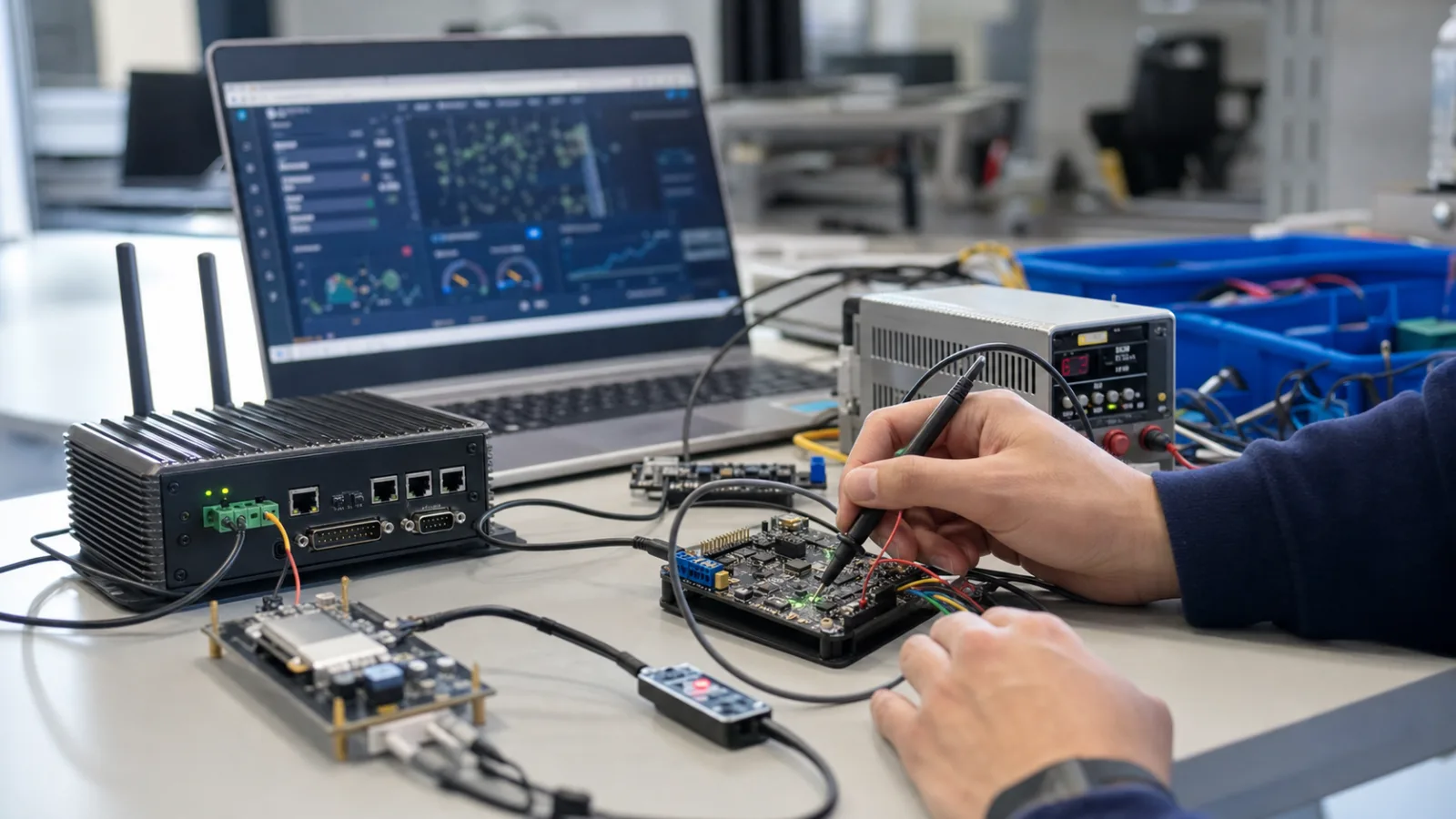
Align module, firmware, app, and cloud before hardware freezes
The best time to catch Tuya hardware risk is before PCB and enclosure decisions are locked.
Electrical and radio constraints
Power, antenna, enclosure, interference, serial interface, boot behavior, and field installation limits.
DP and firmware model
Controls, status, alarms, local logic, schedules, OTA, and diagnostics designed for app and cloud use.
Validation and production
Prototype tests, weak-network tests, factory procedure, certification evidence, and release handoff.
Tuya hardware details that affect launch quality
Hardware decisions shape app experience, cloud integration, support burden, and certification timeline.
Module and interface selection
Module choice should match network environment, cost target, control latency, power budget, and certification route.
- Wi-Fi / BLE / Zigbee / cellular options
- Serial and GPIO requirements
- Power and antenna limits
- Market and certification fit
Firmware and DP coordination
The data model must support both user experience and later business integration.
- Control and status fields
- Fault and alarm DP
- Schedules and local behavior
- OTA and version compatibility
Prototype and factory validation
Test the device as it will be produced and supported, not only as a lab demo.
- Pairing and reset tests
- Weak-network tests
- Factory test points
- Issue triage and documentation
Tuya hardware development delivery path
The path keeps hardware decisions tied to app behavior, cloud integration, and production acceptance.
Product and business definition
Clarify target device types, Tuya ecosystem status, user roles, market plan, data ownership, and the first release boundary.
Scope, risk list, and delivery roadmapPrototype and integration validation
Validate DP model, app experience, cloud API, firmware behavior, account flow, and connected-device test cases before full development.
Prototype, API notes, and test planDevelopment and QA delivery
Build the app, panel, cloud integration, firmware coordination, dashboards, alerts, and business-system links according to the confirmed scope.
Production-ready modules and QA evidenceLaunch and iteration support
Support app release, Tuya project configuration, data monitoring, issue triage, documentation, and the next version roadmap.
Release handoff and iteration backlogWhy use ZedIoT for Tuya hardware development
We can review the device from electrical interface to app/cloud behavior and production handoff.
Hardware plus software review
We connect module selection with firmware, DP model, app workflow, cloud API, and service operations.
Field-minded validation
Testing covers onboarding, weak networks, offline states, fault handling, and support evidence.
Pilot-to-production discipline
The output includes test notes, handoff documents, production risks, and iteration priorities.
Related Tuya hardware paths
 Tuya AIoT Development Use this broader route when hardware also needs app, cloud, and overseas rollout support.
 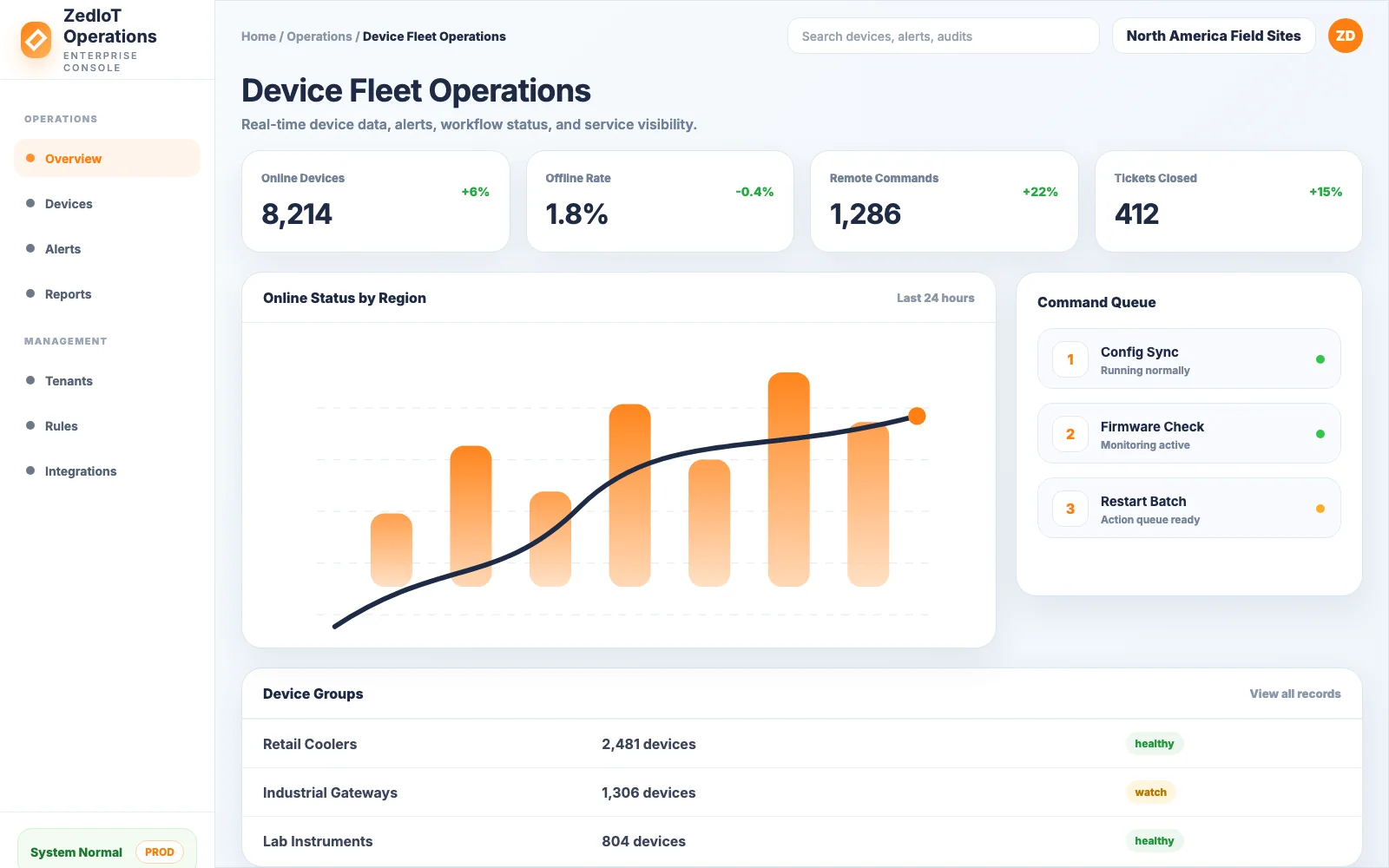 ZedIoT Platform Use a private AIoT platform when Tuya device data must connect with dashboards, alerts, APIs, and customer-owned operations.
  Custom IoT Development For projects that need device connectivity, apps, cloud services, gateways, dashboards, and business workflows beyond Tuya alone.
 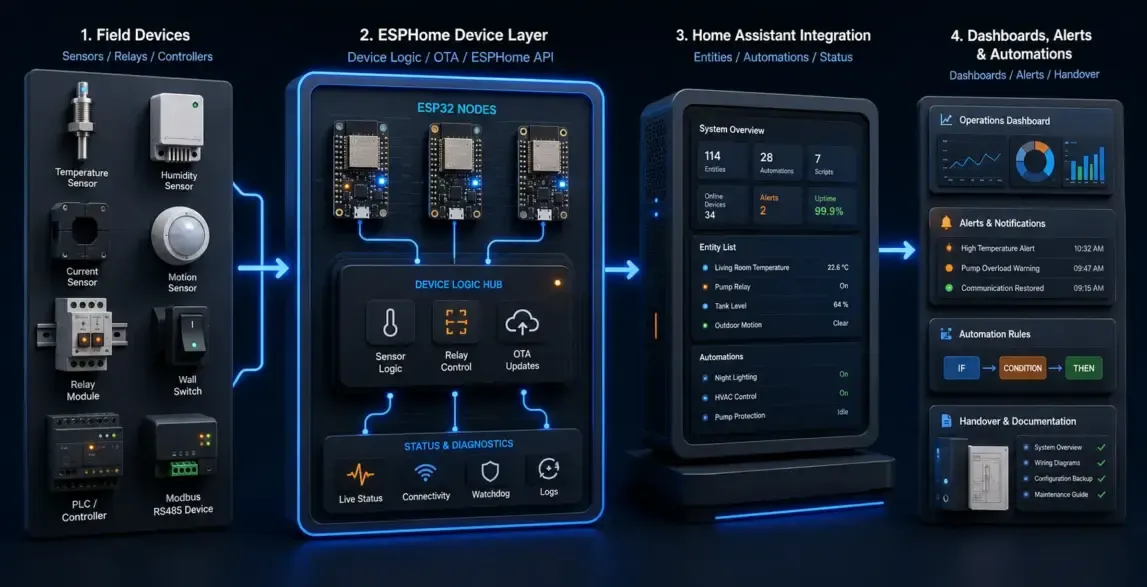 ESPHome + Home Assistant Integration A practical path when local automation, Home Assistant dashboards, and open integration are more important than a closed app flow.
 Tuya hardware planning guides
These guides help connect module decisions with product and launch constraints.
 Tuya strategy How to move from OEM App to App SDK without breaking users Choose the right upgrade path when branding, user ownership, and control experience need more flexibility.
 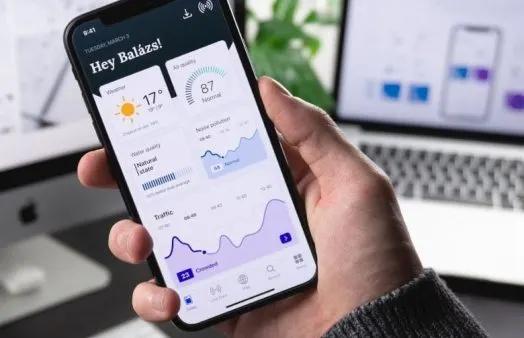 App delivery Tuya Mini App use cases for fast smart-device experiences Use mini apps when the product needs lighter workflow delivery inside the Tuya ecosystem.
  Hardware planning Tuya module selection and hardware integration checklist Avoid late-stage surprises by reviewing module, DP, power, certification, and production constraints early.
 Confirm the ecosystem boundary before defining the development scope
Can you help choose the right Tuya module?
Yes. We review device category, network environment, power budget, control latency, certification needs, cost target, and product roadmap before recommending the module route.
Can you work with our existing hardware team?
Yes. We can support schematic review, DP model, firmware coordination, app/cloud behavior review, prototype validation, and production test planning alongside the customer’s hardware team.
Can ZedIoT build non-Tuya hardware too?
Yes. We also support custom IoT hardware, ESP32, embedded Linux, gateways, PCBA, and private platform integration. Tuya can be one part of a mixed architecture.
Send us your device type, Tuya status, and target market
Tell us your device category, target wireless module, PCB status, DP requirements, firmware constraints, and expected pilot or production timeline.
Full contact pageSubmit project details