
Custom IoT development for connected products
ZedIoT builds the working system behind connected products: device access, gateway or firmware integration, cloud services, dashboards, alerts, APIs, apps, and production handoff.

Connect sensors, controllers, serial devices, gateways, firmware, MQTT/HTTP APIs, and platform services.
Build dashboards, alerts, reports, web/mobile workflows, permissions, and customer-facing product features.
Connect device data with ERP, WMS, CRM, service desks, BI tools, AI workflows, and rollout evidence.
Start with the device reality, then design the software path
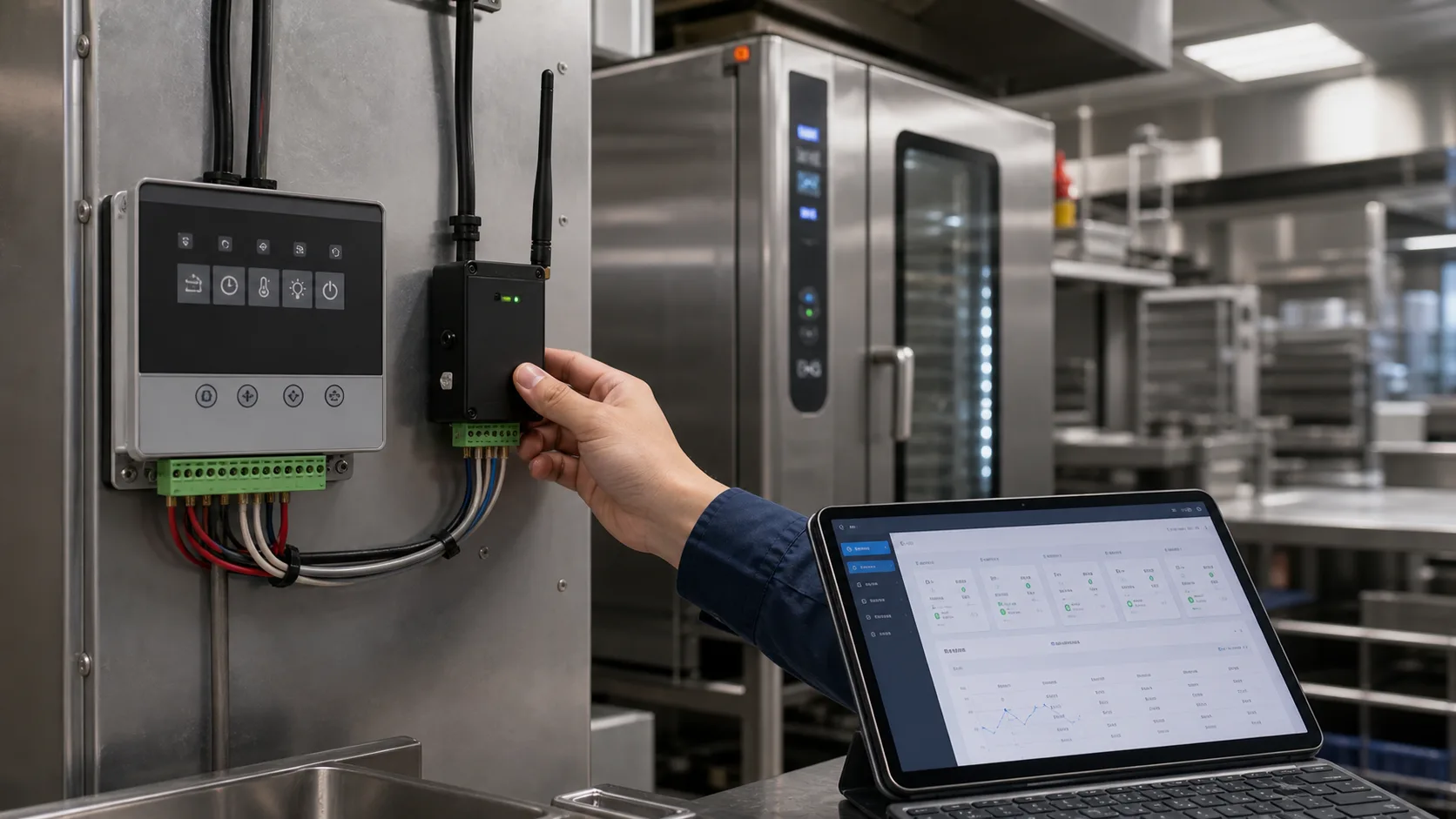
Most custom IoT projects start from existing controllers, partial protocol documents, field wiring, weak networks, and a business team that needs reliable status, alerts, and actions.
- Confirm device protocol, data quality, and control limits before UI design
- Choose gateway, firmware, direct cloud, or hybrid access by site condition
- Connect alarms, reports, and APIs to the team that owns the outcome
What we build for custom IoT projects
A custom IoT project should connect field devices with the software workflow that actually changes operations, service, reporting, or product value.
Device connectivity and protocol access
Connect Modbus, serial, BLE, ZigBee, Wi-Fi, cellular, MQTT, HTTP, custom frames, and gateway paths into a stable data model.
Cloud platform and backend services
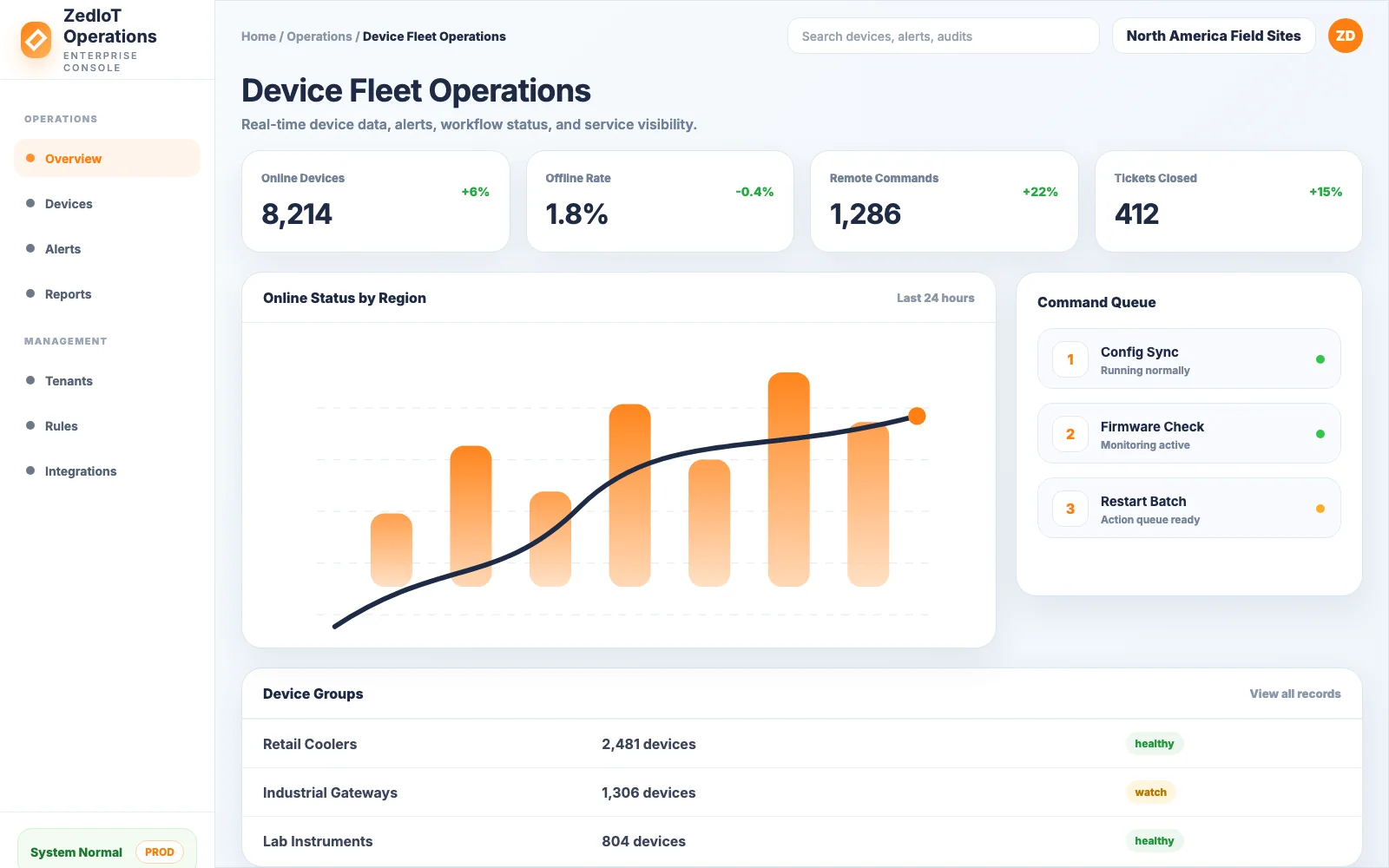
Build device registry, telemetry storage, command channels, rule engine, alarms, reports, roles, logs, and APIs.
Web, mobile, and customer workflows
Create dashboards, mobile operation screens, notification flows, customer portals, service tasks, and management reports.
Gateway, firmware, and edge integration
Bridge existing devices through firmware changes, edge boxes, local cache, diagnostics, OTA, and field service tools.
AI + IoT workflow extension
Add AI vision, voice, RAG, agents, anomaly detection, or automation only where device data can support a useful decision.
Private deployment and production handoff
Prepare source code, deployment notes, API contracts, monitoring, backups, release records, and long-term support boundaries.
Use custom IoT development when a real operating workflow must be built
This service is for teams that need implementation, not only advice. If the device, protocol, users, and first business workflow are still unclear, start with IoT consulting first.
Good fit
- You need a working pilot or product build across device, cloud, app, and integration layers.
- Existing equipment must be connected to dashboards, alerts, reports, APIs, or service workflows.
- The project needs private deployment, source handoff, field diagnostics, or long-term product ownership.
Not the right first step
- You only need a vendor-neutral feasibility review before choosing a build path.
- The device protocol, target users, and operating workflow are not defined enough to estimate implementation.
- A standard SaaS dashboard already solves the problem without customization or integration.
A practical IoT stack from device signal to business action
The architecture is shaped around the device, the field site, and the operating loop, then expanded into platform services, applications, and business-system integration.
Field equipment
Sensors, controllers, serial devices, gateways, edge boxes, and existing product electronics.
Access layer
Protocol adapter, MQTT/HTTP bridge, gateway software, local cache, and data normalization.
Platform services
Device registry, telemetry, commands, alerts, rules, reports, permissions, and APIs.
Business loop
Dashboards, service tickets, ERP/WMS/CRM integration, notifications, and evidence records.
Custom IoT development should produce a working operating loop
A connected product becomes valuable when device data leads to reliable monitoring, safe control, exception handling, API integration, and measurable business workflow.
The design starts from actual equipment, protocol quality, and site constraints.
Dashboards, alerts, control, reports, and APIs are tied to real operating roles.
The first release proves a meaningful operation path before rollout expands.
We Design and Develop AI + IoT Applications Across 20+ Industries
As an IoT development company, we design and develop AI + IoT applications for industrial equipment, healthcare devices, logistics, agriculture, energy, sports venues, transportation, and other business scenarios that need real-time monitoring, data collection, analysis, and workflow automation.
Industrial IoT
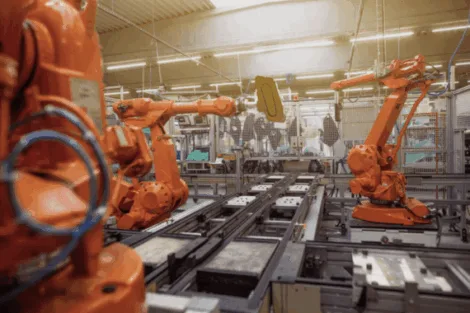
Predictive maintenance, asset management, industrial device monitoring, and video-assisted operations for factories and equipment vendors.
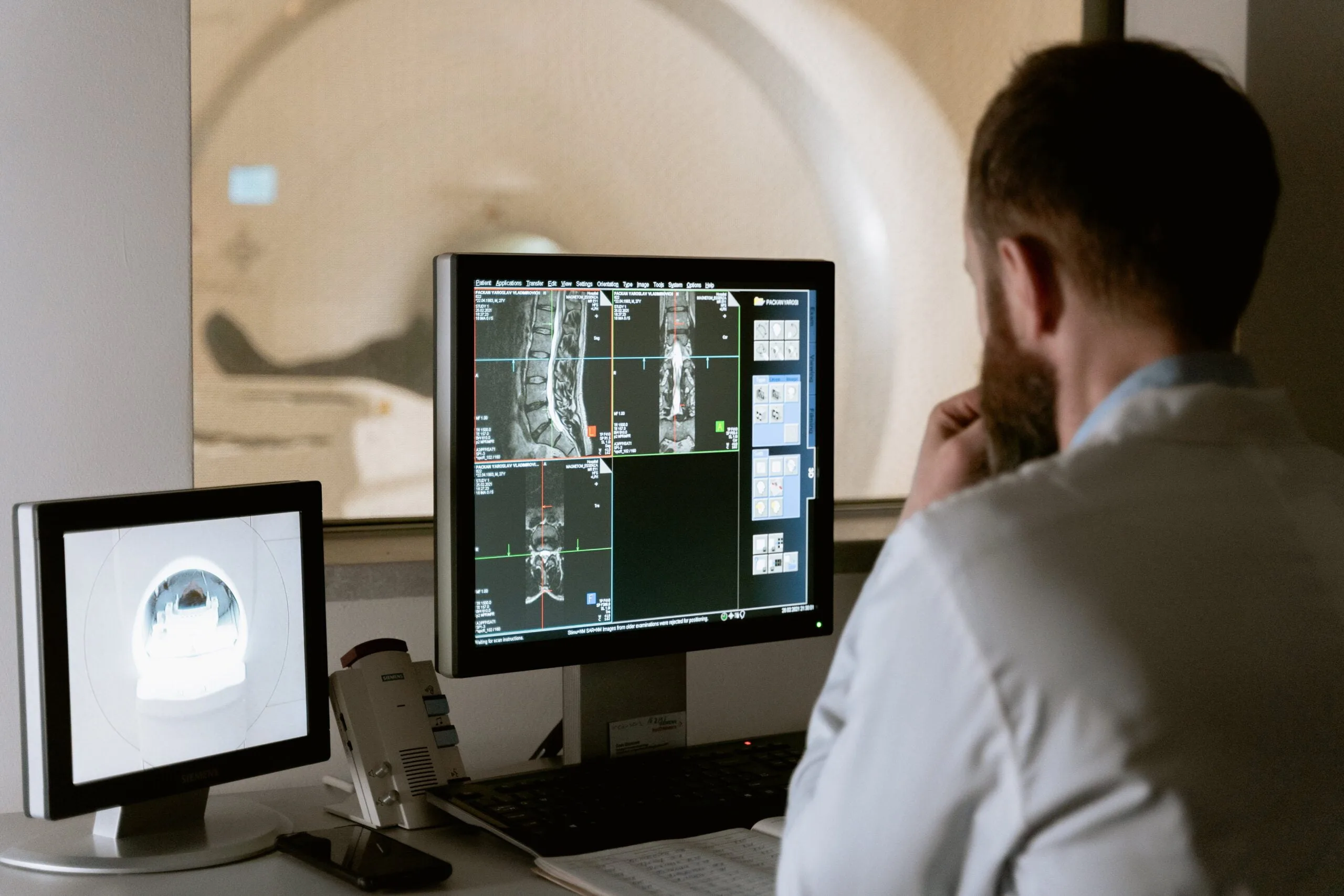
Healthcare IoT
Smart medical systems, connected healthcare equipment, wearable monitoring devices, and AI-assisted health data applications.

Logistics and Warehouse
Warehouse visibility, fleet and inventory tracking, asset localization, automated alerts, and operations dashboards.

Farm and Agriculture
Farm mapping, livestock tracking, vehicle GPS tracking, environmental sensing, and connected equipment operations.

Energy and Utilities
Equipment data dashboards, device modernization, energy-saving analysis, and maintenance service platforms.

Game and Sport
Game equipment control, smart controller embedded development, OpenWrt-based device systems, and venue operations.

Transportation
Fleet management, charging station management, vehicle tracking, route visibility, and operations reporting.
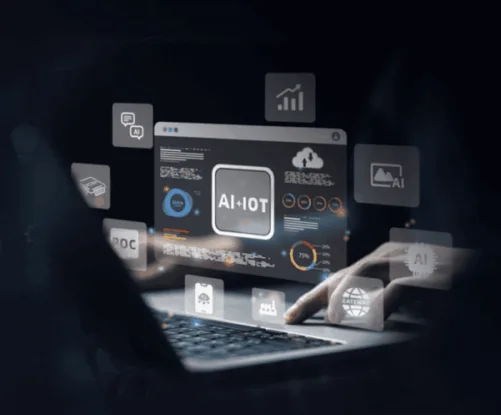
Custom AIoT Solutions
From hardware and software to analytics and applications, we shape industry-specific AIoT systems and MVPs around your market stage.
Delivery scope for a custom IoT build
The scope can start small, but every deliverable should make the system easier to pilot, operate, integrate, and maintain.
Integration architecture
Device access choices, data model, protocol mapping, and rollout boundary.
Platform modules
Dashboards, device pages, alerts, reports, commands, and permission workflows.
Pilot handoff
Deployment notes, test devices, acceptance data, and next-release roadmap.
How the work moves from feasibility to handoff
Business and device discovery
Review the operating workflow, device list, interfaces, data quality, existing systems, and target outcome.
Feasibility and architecture
Choose gateway, direct cloud, platform, app, AI, and integration path based on field constraints.
Prototype and integration
Connect representative devices, prove data flow, build key screens, and validate alarm or workflow logic.
Pilot hardening
Add permissions, logs, reports, deployment notes, QA evidence, and support workflow before rollout.
Production iteration
Scale device models, integrations, AI workflows, and operating reports based on pilot evidence.
Practical advantages for AI + IoT product delivery
Device-to-business ownership
We plan firmware, gateway, platform, app, AI, and business integration as one operating loop.
Reusable platform and hardware base
ZedIoT products and platform modules shorten risky work without forcing every project into the same template.
Field-ready handoff
Logs, deployment notes, test evidence, support boundaries, and iteration plans are part of delivery.
Questions to answer before a custom IoT build
What can ZedIoT deliver in a custom IoT development project?
Typical delivery can include device access, protocol adapters, gateway or firmware integration, cloud services, dashboards, alerts, reports, APIs, mobile or web workflows, private deployment notes, and production handoff.
When should we start with consulting instead of custom development?
Start with consulting when the device protocol, target workflow, data quality, security boundary, platform choice, or first pilot scope is still uncertain.
Can you work with existing controllers and legacy equipment?
Yes. Many projects start with existing controllers, serial devices, Modbus maps, private protocols, field wiring, or gateway constraints. The first step is to confirm what data and commands are available.
Can the project include private deployment and source-code handoff?
Yes. Private deployment, source-code delivery, API contracts, logs, backups, release notes, and long-term handoff can be included when the customer needs ownership.
Discuss a custom IoT development project
Share your device types, protocol situation, target users, current systems, expected first workflow, and whether you need firmware, gateway, platform, app, AI, or private deployment support.
- AI + IoT product architecture review
- Hardware, firmware, cloud, and application integration
- Prototype planning and production support