
AI Development Technology
YOLO Vision AI Development
YOLO is a strong option for object detection and visual inspection when the project has representative images, clear acceptance criteria, and deployment constraints.
What YOLO services mean in production
ZedIoT helps product teams use YOLO as part of a complete engineering system: data access, workflow design, application UI, business integration, monitoring, and deployment. The goal is not a demo chatbot; it is a maintainable AI capability that can run inside connected products, operations teams, and customer-facing workflows.
Industrial quality inspection
Detect missing parts, wrong labels, surface defects, packaging issues, or assembly errors.
Warehouse recognition workflow
Recognize goods, bins, labels, pallets, or operational events in warehouse processes.
Retail and cold-chain monitoring
Use visual detection for shelf, cabinet, stock, and abnormal-state monitoring.
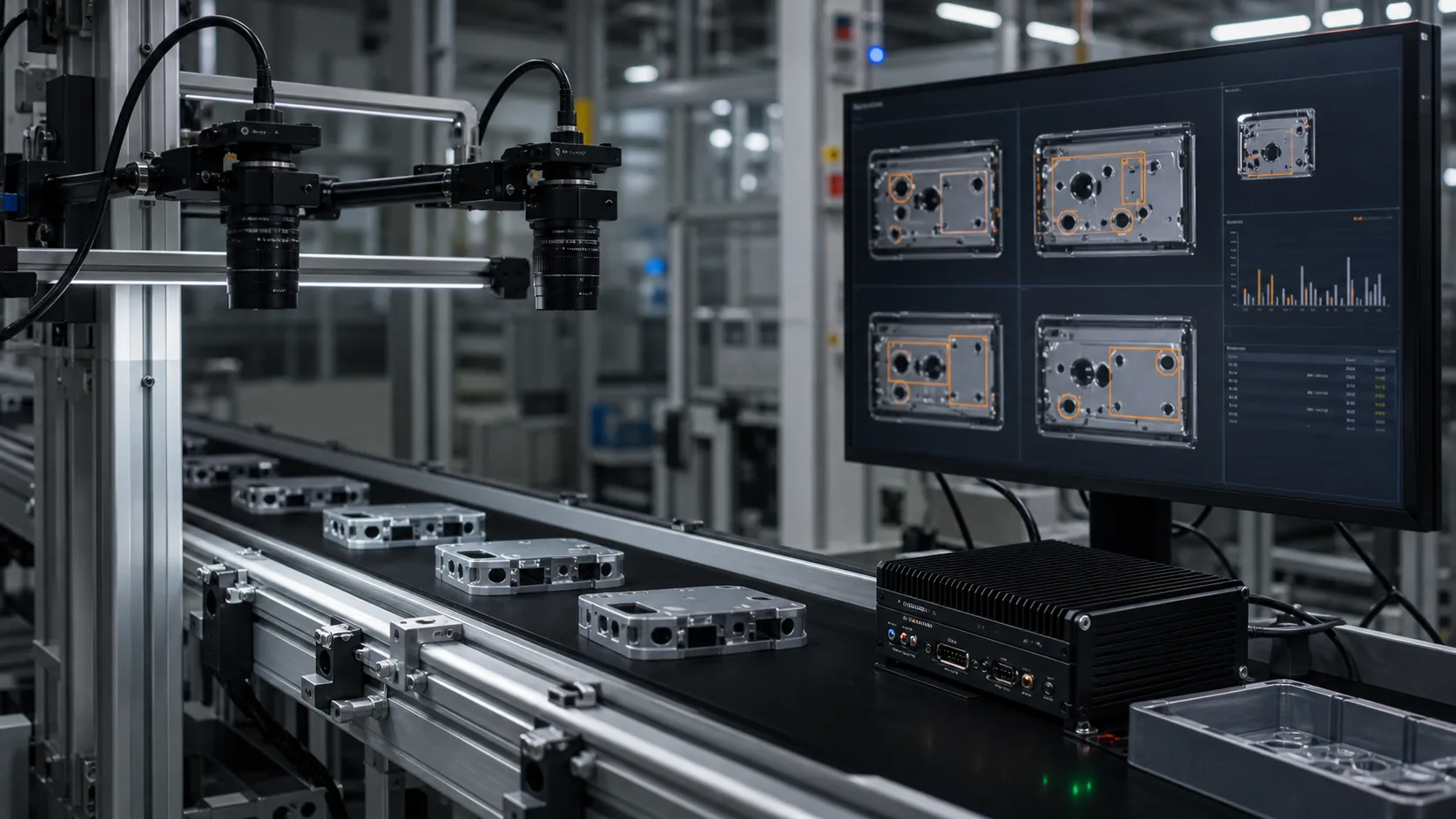
Connect detection models to a production inspection loop
YOLO projects depend on real camera angles, lighting, labeling quality, false alarm handling, edge deployment, and equipment integration.
From model capability to production workflow
Data and device context
We map the documents, APIs, device telemetry, images, audio, user actions, and business systems that YOLO needs to access.
AI orchestration layer
We design prompts, tools, retrieval, state, evaluation, and fallback behavior so YOLO behaves predictably in real workflows.
Product integration
We package the AI capability into web apps, mobile apps, dashboards, device consoles, automated workflows, or edge-side services.
Security and operations
We add authentication, audit logs, cost controls, data filtering, monitoring, versioning, and release procedures for long-term operation.
What we build around YOLO
The output is a working AI capability with integration, deployment, monitoring, and handoff materials.
Dataset and labeling workflow
Define target classes, collect images, label samples, manage quality, and build a training/validation split.
Vision model training and tuning
Train, evaluate, optimize, and version YOLO models against precision, recall, latency, and false alarm targets.
Camera and edge deployment
Integrate cameras, lighting, edge hardware, result dashboards, alarms, and system APIs.
- Technical selection and feasibility report
- Architecture diagram and integration map
- Runnable AI workflow, service, or application
- API documentation and deployment instructions
- Monitoring, logging, and fallback configuration
- Evaluation report and next-iteration backlog
Validate the conditions before scaling YOLO
Data readiness
A production AI project needs stable data access, clear ownership, acceptable quality, and permission boundaries.
Workflow impact
The best first project is a repeatable workflow where speed, accuracy, cost, or risk can be measured.
Deployment constraints
Cloud, private cloud, local server, and edge deployment have different trade-offs in cost, privacy, latency, and maintainability.
Human control
If the AI triggers orders, tickets, device commands, or customer communication, approval and rollback paths must be explicit.
Continue from technology to a buildable project
Common questions before starting
Is YOLO enough by itself for a production project?
Usually no. The model or framework is only one layer. Production work also needs data access, permissions, UI, business logic, monitoring, fallback behavior, and deployment.
Can this be integrated with our existing platform?
Yes. We usually integrate through REST APIs, webhooks, database sync, message queues, SDKs, or private platform extensions.
Do you support private deployment?
Yes. We can design cloud, private cloud, on-premise, local model, or hybrid deployment based on data sensitivity and operations capacity.
How do we start safely?
Start with one workflow, real sample data, a narrow success metric, and a short validation sprint before expanding the scope.
Talk to an AI-IoT engineering team
Share your product idea, current hardware, target workflow, or integration challenge. We will help you evaluate the fastest path to a working prototype and production-ready system.
- AI + IoT product architecture review
- Hardware, firmware, cloud, and application integration
- Prototype planning and production support